J&S Shoreline, LLC
686 Chandlers Ferry Road
Hartwell, GA 30643
706-377-4891
706-426-4235 (FAX)
Hartwell, GA 30643
706-377-4891
706-426-4235 (FAX)
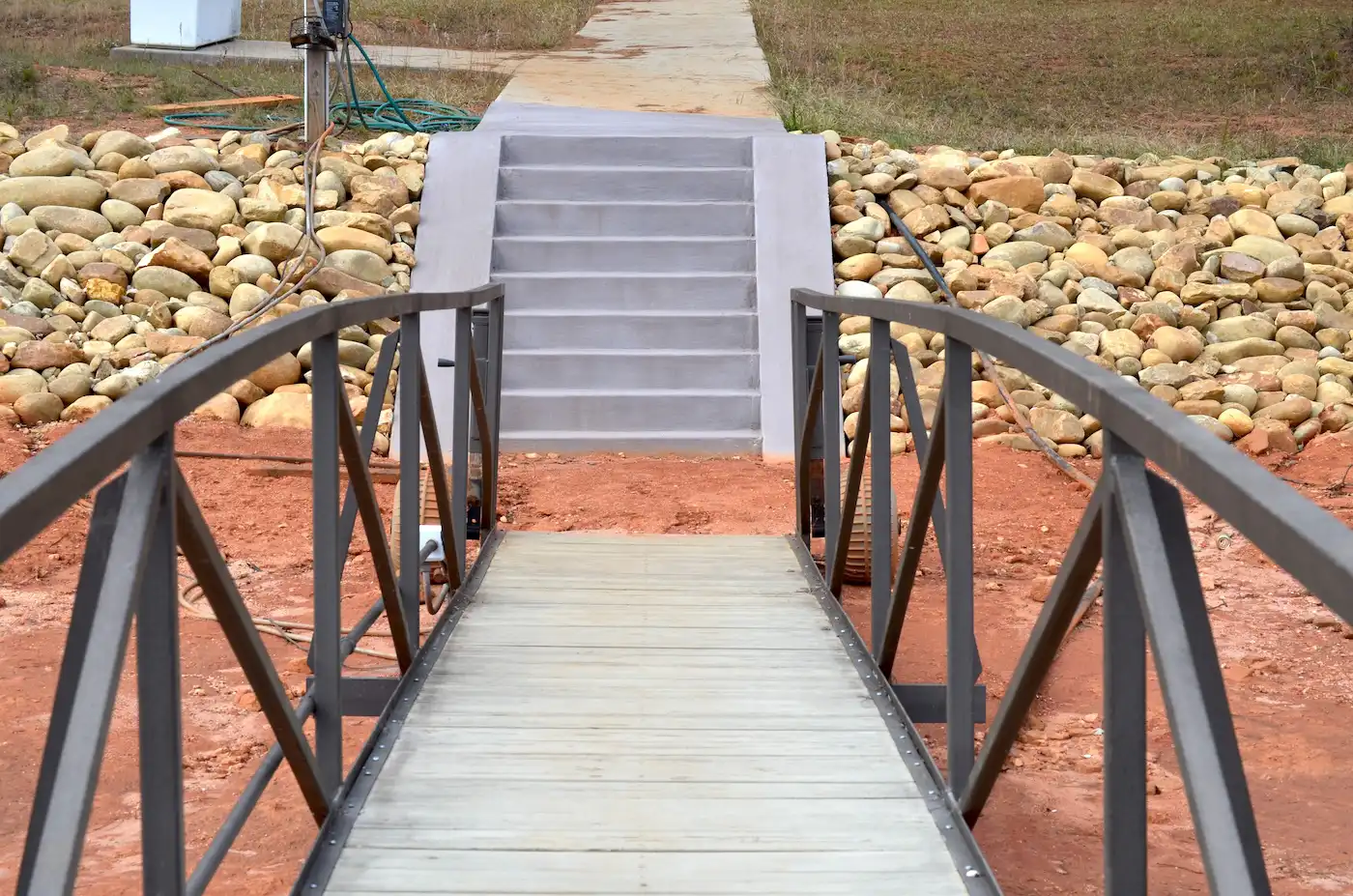
Concrete steps and ramps with TN river rock rip rap installed in Anderson, SC.
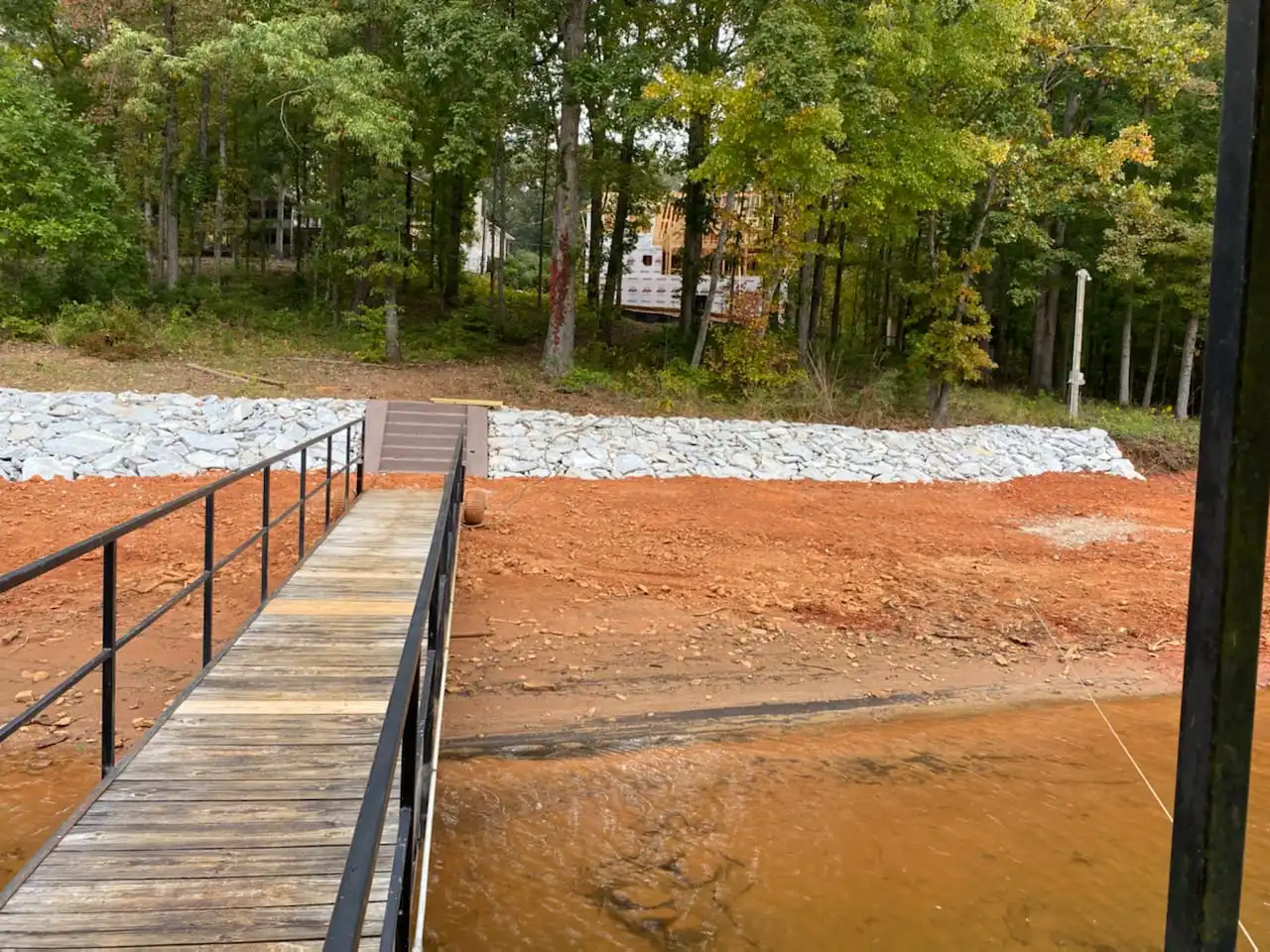
Concrete steps and ramps with Granite rip rap installed in Westminster, SC.
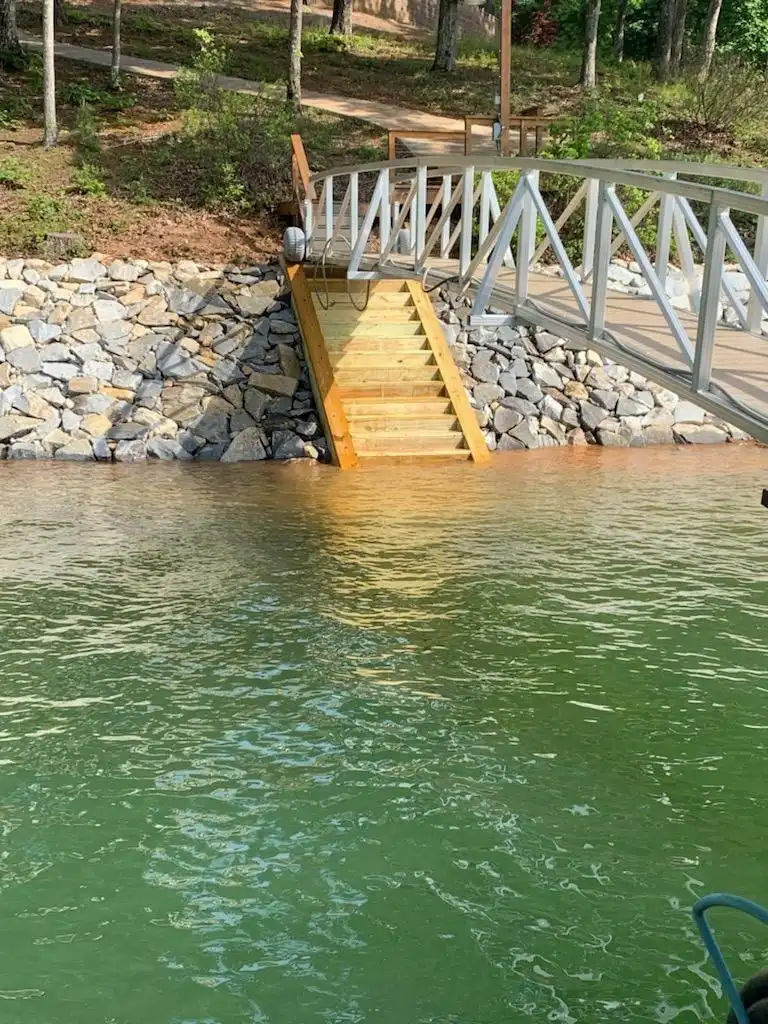
Enclosed Wood Shoreline steps with built in wheel ramps & Granite rip rap installed in Anderson, SC.
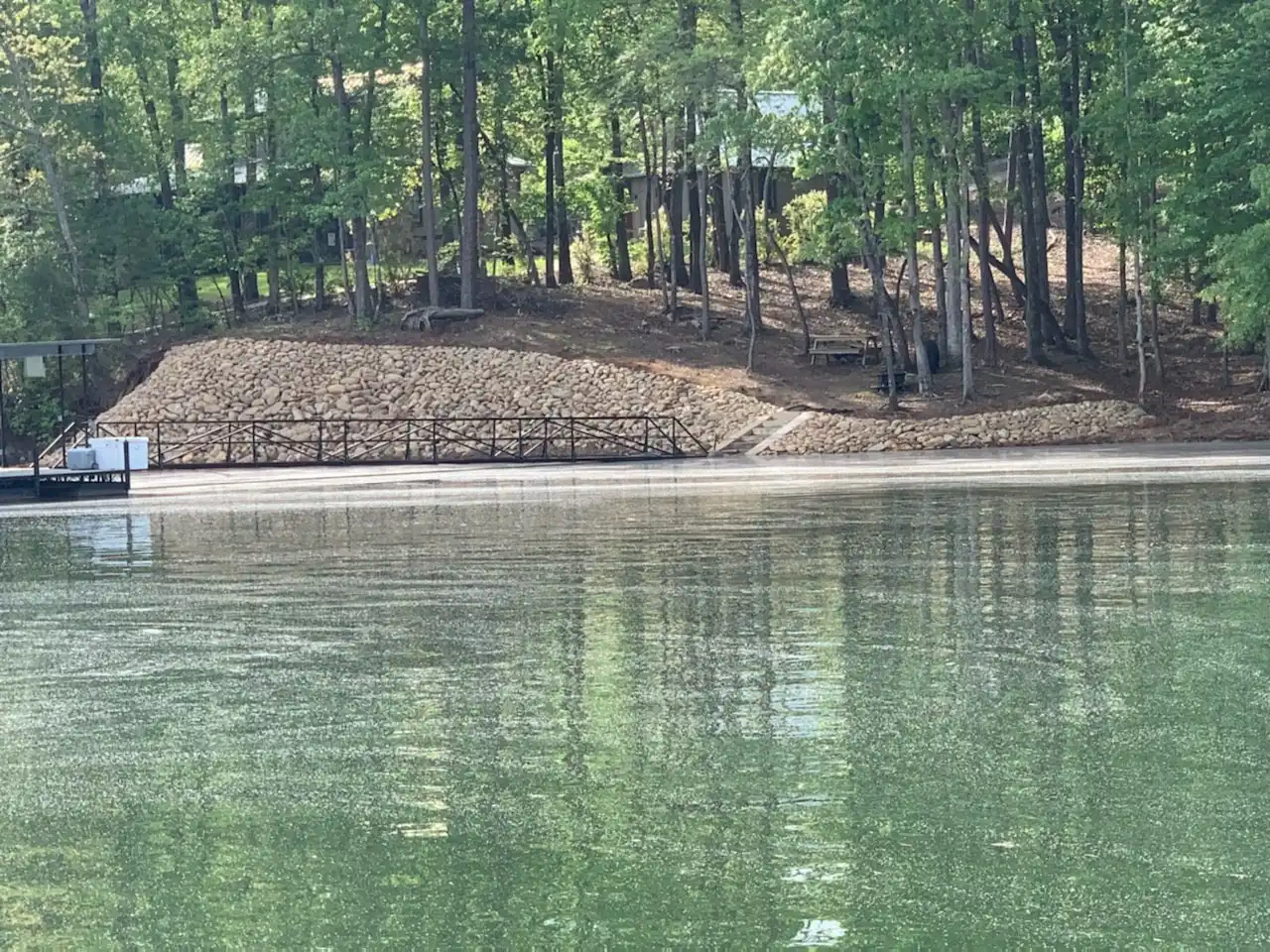
TN Crab orchard steps with ramps & TN river rock rip rap installed in Toccoa, GA.
Shoreline erosion can result from waves, changing water levels, rainfall and stormwater runoff. Water moving across exposed ground can loosen soil and carry it downhill toward the lake. Over time, this process may cause the bank to deteriorate and contribute additional sediment to the water.
No. Wave action is a common cause of erosion, but erosion can also begin on the land side of the shoreline. Rainfall and surface runoff may remove soil from behind and around the bank, even when lake water is not directly contacting it.
Yes. Low water may make shoreline erosion less noticeable, but it does not eliminate the risk. As the lake recedes, previously submerged soil can become exposed to rainfall and runoff. Without adequate protection, those areas may continue to erode and weaken.
Riprap is a protective layer of properly sized rock installed along a shoreline. It creates a stable, armored surface that helps protect the soil and bank from waves, moving water, rainfall and surface runoff.
Riprap helps absorb and disperse energy from waves and water movement. It also covers vulnerable soil, making it more difficult for rainfall and runoff to loosen and carry that soil into the lake.
The spaces between the rocks allow water to pass through while helping reduce its speed and erosive force. Proper rock sizing, placement and site preparation are important to the effectiveness of the installation.
Yes. Riprap protects more than the portion of the shoreline currently touching the water. It can continue to stabilize the underlying soil when it is submerged, located at the waterline or exposed during periods of low water.
When the lake level drops, exposed riprap still helps shield the bank from rainfall, runoff and other forms of land-side erosion.
Soil removed by erosion is transported by runoff and water movement. Once that material reaches slower-moving water, heavier particles begin to settle. Fine materials such as silt and clay may remain suspended longer before eventually settling to the bottom.
Sediment frequently collects in coves, along shorelines, around docks and in other areas where water movement slows. It may originate from nearby shoreline erosion or from runoff occurring elsewhere in the surrounding watershed.
Properly installed riprap can reduce the amount of exposed soil available to be eroded and transported. Stabilizing a vulnerable shoreline may therefore help limit one source of future sediment accumulation.
Riprap cannot remove sediment that has already accumulated, and it may not address every source of sediment entering an area. Existing drainage patterns and broader watershed conditions may also need to be considered.
Shorelines experience different pressures as weather and water levels change. During high-water periods, riprap helps protect the bank from waves and water movement. During low-water periods, the exposed rock continues to protect soil from rainfall and land-side runoff.
For this reason, riprap should be viewed as a year-round shoreline stabilization measure rather than protection that only works when the lake is full.
The goal is to protect the bank, minimize soil loss and reduce the amount of eroded material entering the lake. Effective stabilization also supports the long-term usability and integrity of the shoreline property.
Every property is different. Soil conditions, slope, drainage, wave exposure and changing water levels can all affect the type of shoreline protection that may be appropriate.
J&S Shoreline can evaluate the site and recommend a riprap solution based on the property’s conditions and stabilization needs.
If you are concerned about shoreline erosion, exposed soil or sediment accumulating near your property, contact J&S Shoreline. Our team can evaluate the area and discuss a professionally installed riprap solution designed for your shoreline.